
Happy Monday! We’re kicking off this Monday realizing that we forgot to add the link from the Axios Miami article on Friday 🤦🏼♀️ you can find that link here. Cheers to a more keen eye this week!
In This Issue: Support Hurricane Ian Recovery | Cisco Catalyst 2960S Series FlexStack Module | Basics of Port Mirroring Configuration | News to Start Your Day
The CK Daily – Hello October!!
Happy Monday and hello October!
Only 28 more days until Halloween, which for me is a great excuse to eat lots of candy, enjoy pumpkin treats, and watch scary movies. It’s starting to feel more like Fall here in Georgia and I’m definitely enjoying the cool weather free from mosquitos. If there is one creature I dearly desire to be removed from existence, the mosquito tops the list, with ticks being a close second.
We spent a lot of time outdoors around the house this weekend doing some yard work and washing cars. It felt great to get some Fall cleaning in – I know that’s usually done in Spring, but I think there’s a place to spruce things up in the Fall as well – really anytime when it’s not blazingly hot and humid or frigid and freezing. It’s also easier to coax the kids outside and away from their devices.
On another note, I’m still reeling from reading and seeing the amount of destruction that Hurricane Ian caused, I can’t imagine what those families are going through right now. If there’s anyone specific that we can pray for please let us know!
I hope you have a great week and a great Monday!
Cris
Product Spotlights & Updates
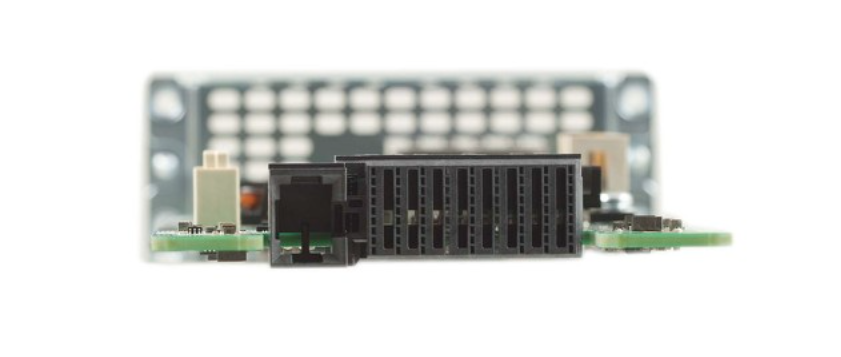
The NIM-2FXO from Cisco is a 2 port interface module equipped with 2 FXO network interfaces for better connectivity and convenient usage where it matters. It’s compatible with Cisco’s 4331 and 4351-X ISRs and is equipped with 2 analog ports.
Learning Center Article – Choosing the Right Network Card
When you think about networking, there’s a lot of focus on switches, panels, racks, cables, and the backbone infrastructure that makes it all work.
It’s easy to forget about devices that enable individual networking components to function. One such case is a network interface card (NIC). They allow your computerized devices to connect to the network, so they’re absolutely essential. Many devices have NICs built into them, which is why they are easy to overlook. But, there are times when you need to purchase NICs. When that happens, this guide will help you choose the right option.
Today’s News to Start Your Day:
- Pro Football Hall of Fame quarterback Terry Bradshaw said Sunday that he has been treated for two forms of cancer in the past year. Bradshaw said on “Fox NFL Sunday” that he was diagnosed with bladder cancer late last year and was treated, including surgery, at Yale University Medical Center. Bradshaw reported, “As of today, I am bladder cancer free.”
- Ukrainian forces achieved their biggest breakthrough in the south of the country since the war began, bursting through the front and advancing rapidly along the Dnipro River on Monday, threatening supply lines for thousands of Russian troops.
- NASA just successfully completed its first practice run of a technique that might just save the world from an asteroid impact. The mission began on Nov. 24, 2021, when the Double Asteroid Redirection Test (DART) probe lifted off from Vandenburg Air Force Base onboard a SpaceX Falcon 9 rocket. On Sept. 26, 2022, DART reached the end of its journey when it smashed into an asteroid called Dimorphos, which orbits a larger asteroid named Didymos, at a speed of 14,000 miles per hour. The very last image returned from DART before impact was of Dimorphos’ rubble-strewn landscape.
- It’s long been widely believed that dogs can detect extreme emotions by smell. Now scientists at Queen’s University Belfast in the U.K. have proven that a dog’s nose knows. Acute stress changes the compounds found in human sweat and breath, research has shown. In a recent experiment, four dogs were presented with sweat and breath samples collected from human volunteers — before and after the people engaged in a difficult math exercise. The canine participants were able to detect with a greater than 90 percent accuracy which samples came from before and which came from after the 36 human volunteers had spent three minutes trying to count backward, aloud, from 9,000 in units of 17