
Happy Tuesday & Happy National Relaxation Day! Today encourages us to slow down, unwind, and take care of ourselves. What’s your favorite way to kick back and relax?
In This Issue: The Surprising Impact of Praise on Motivation & Performance | Adjustable Impact Punch Tool Blade | Choosing the Right Network Card | News to Start Your Day
The CK Daily – The Surprising Impact of Praise on Motivation & Performance
Good Morning & Happy Tuesday! Hope everyone is staying cool out there in the midst of this heatwave that so many of us are experiencing!
I don’t know about you, but I love listening to podcasts when I’m doing “mindless” activities like cleaning, running, or driving. One of my favorites is the “Huberman Lab” podcast which is hosted by Dr. Andrew Huberman and discusses “science and science-based tools for everyday life” as he says in each episode.
I listened to an episode recently that I thought was fascinating and worth sharing here. The overarching theme of the podcast was about growth mindset, but he discussed a research paper with a fairly shocking title, “Praise for Intelligence Can Undermine Children’s Motivation and Performance”.
I would have guessed the exact opposite to be true before learning about this study! Essentially, they took a group of kids and split them into 3 groups prior to conducting the study which involved giving the kids sets of problems/challenges:
– Intelligence Feedback Group – These kids received performance feedback that was “intelligence feedback” meaning they were told that they are smart, talented, good at learning, etc.
– Effort Feedback Group – These kids received “effort feedback” meaning they were told things like “You tried really hard on that problem” or “It was great the way that you applied effort and persisted”.
– Control Group – These kids received no feedback.
Here is what they found:
– The kids who received intelligence feedback, when later offered a new set of challenges/problems, tended to pick the problems that they knew they could perform well on whereas the kids in the effort feedback group tended to pick challenges/problems that were more difficult and stood to actually teach them more. So, the kids in the intelligence feedback group went for the least amount of challenge in order to continue getting the praise they were used to and the kids in the effort feedback group chose the more challenging problems that allowed them to exert effort to keep getting the effort praise that they were used to. Essentially, both groups were attached to the praise, but each type of praise encouraged a different set of behaviors.
– When all the kids in the study were given the same set of raw cognitive problems (prior to receiving any feedback at all), all 3 groups tended to perform about the same. They were then given praise after completing the problems (either effort or intelligence feedback). They were then given another set of problems and the kids who received intelligence feedback actually saw a significant decrease in performance on the second set of problems while the kids who received effort feedback saw a significant increase in performance. The kids in the control group performed about the same.
– When offered more sets of problems, the kids in the effort group tended to take on more challenges than those in the intelligence group.
To summarize, the kids in the effort feedback group not only opted for harder challenges, but performed better and chose to take on many more challenges.
This is all so fascinating to me as I find myself naturally inclined to give intelligence feedback, but this is making me re-think my choice of words! While this study is particularly helpful for those who are raising kids, it’s also applicable to our own personal lives and re-thinking our inner dialogue!
Hope you found this as interesting (and helpful!) as I did!
Rebecca
Product Spotlights & Updates
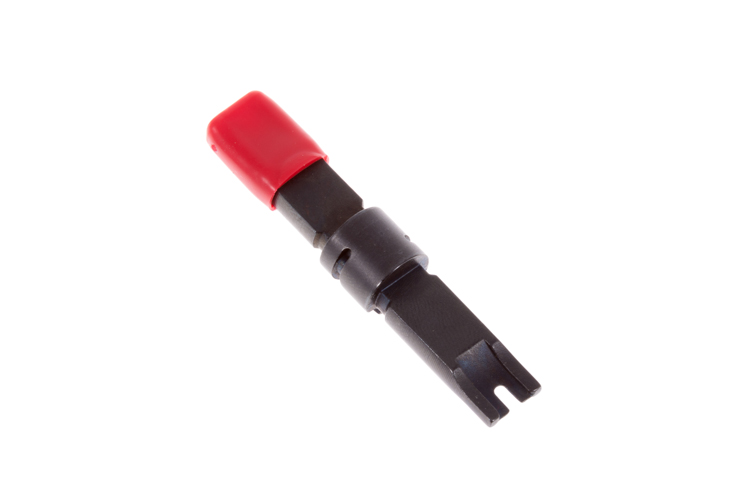
Handheld punch tools are an installers best friend when “punching down” copper leads into a block. Most commonly, these blocks will be on the back of a patch panel or on the front of telco terminal strips. Often called quick connect blocks, terminating blocks or connecting blocks, these points of termination contain banks of IDC’s, or insulation displacement connectors. When “punching down”, the tool forces the copper lead inside of the IDC which exposes the copper core, making a connection.
Learning Center Article – Choosing the Right Network Card
When you think about networking, there’s a lot of focus on switches, panels, racks, cables, and the backbone infrastructure that makes it all work.
It’s easy to forget about devices that enable individual networking components to function. One such case is a network interface card (NIC). They allow your computerized devices to connect to the network, so they’re absolutely essential. Many devices have NICs built into them, which is why they are easy to overlook. But, there are times when you need to purchase NICs. When that happens, this guide will help you choose the right option.
Today’s News to Start Your Day:
- Stock futures were higher to start the week.
- Home Depot, Walmart and Target will report quarterly earnings this week.
- Former Goldman Sachs CEO Lloyd Blankfein pushed back on a report saying he had offered to return to the firm to help current CEO David Solomon.
- Tesla rolled out cheaper versions of its Model S and Model X vehicles in the U.S. as competition in the electric vehicle space continues to ramp up.