In a data center, network performance isn’t a goal, it’s the baseline. When milliseconds of latency delay database queries or drop packets from virtualized workloads, the consequences hit bottom lines instantly. These environments face unique physical demands: towering rack density, constant thermal pressure, and zero tolerance for signal instability. Office-grade cabling simply cannot survive here.
This guide explains what really works inside data centers. From top-of-rack (ToR) switch uplinks to structured runs through hot aisles, it breaks down which data center cabling standards matter, why shielding is non-negotiable, and how to prevent slowdowns at the physical layer before they cascade into costly downtime.
Achieving 25G, 40G, and 100G Throughput
As data centers migrate from 10G to 25G and beyond, switch-to-server connections are becoming the new chokepoint. These high-throughput paths demand extremely low attenuation, minimal signal distortion, and maximum electromagnetic protection.
Cat8 cabling is now the copper standard for this scenario. Built to the TIA-568.2-D specification, it supports frequencies up to 2000 MHz and delivers 25GBASE-T and 40GBASE-T performance at distances up to 30 meters. Inside a rack or between adjacent rows, Cat8 eliminates the need for fiber in short-haul links, while retaining RJ45 compatibility.
For uplinks beyond 30 meters or speeds beyond 40G, fiber optic cabling is the clear choice. OM4 and OM5 multimode fibers support 100G and 400G across longer paths between data halls, aggregation layers, and core switches. While fiber handles the bandwidth, copper still dominates for direct server patching thanks to PoE compatibility and simple terminations.
Practical Insight: For short-range uplinks between switches and servers, Cat8 structured cabling is a cost-effective and future-proof alternative to fiber. Especially when power delivery and grounding continuity matter.
Mitigating Crosstalk and EMI in High-Density Racks
Unlike office environments, data centers are saturated with EMI. Switch power supplies, UPS rails, and power distribution units all emit electromagnetic noise. Combine that with hundreds of cables tightly packed in trays and your signal integrity begins to erode.
That’s why shielding isn’t a luxury; it’s a requirement. Unshielded twisted pair (UTP) cables are too vulnerable for modern data centers. Instead, S/FTP construction offers dual-layer defense: each pair is foil-wrapped to block internal alien crosstalk (ANEXT), while an outer braided shield deflects external EMI from nearby power lines and equipment.
Improper grounding turns shielding into a liability. An unterminated or floating drain wire acts as an antenna, amplifying noise rather than stopping it. Always ground both ends of shielded cable runs, and validate continuity using a cable certifier or tester designed for shielded networks.
Pro Tip: To maintain full 10G–40G stability, avoid mixing shielded and unshielded cables in the same pathway. Stick to fully shielded end-to-end links, especially in raised floor systems and overhead trays filled with mixed voltage lines.
Cabling Strategies for Modern Data Center Architectures
Not all cabling routes in a data center are the same. How you deploy patching infrastructure depends heavily on your physical layout and each approach comes with different demands on cable selection.
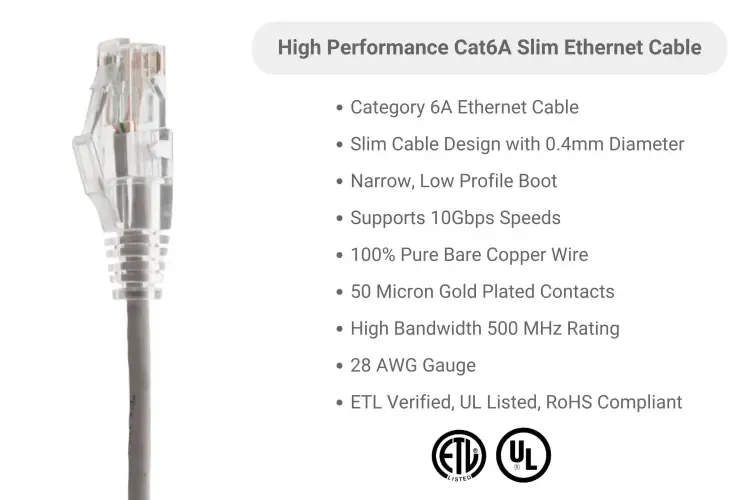
Top-of-Rack (ToR) setups rely on ultra-short patch cords from the switch mounted inside each rack. Here, airflow is king. Using slim-profile Cat6a patch cables not only reduces congestion in the rack but also improves thermal dissipation.
In End-of-Row (EoR) or Middle-of-Row (MoR) layouts, longer links run from centralized switching cabinets to every rack. These require bulk-rated plenum cables that comply with building fire codes and support easy labeling, bend radius compliance, and future tracing.
Meanwhile, Direct Attach Copper (DAC) cables, factory-terminated twinax assemblies, and Active Optical Cables (AOC) pre-terminated fiber alternatives are often used for ultra-low-latency switch interconnects within or between racks. DACs offer lower latency and cost, while AOCs provide fiber-like range in a plug-and-play copper form factor.
Deployment Tip: For rack-to-rack runs under 7 meters, DAC is the most efficient. Between 7–30 meters, Cat8 cable with structured cabling infrastructure provides better flexibility, PoE support, and easier long-term maintenance.
Power over Ethernet (PoE) in the Data Center
While servers rely on dedicated power feeds, many data center edge devices, from access points and sensors to IP-based surveillance, use Power over Ethernet (PoE). The newest IEEE 802.3bt standard enables power delivery up to 100 watts, opening new use cases in remote power distribution.
However, high-wattage PoE comes with serious cable stress. Long bundles of PoE lines generate thermal rise that degrades performance if the cable gauge, conductor material, and shielding aren’t optimized.
That’s why pure copper Cat6a or Cat8 cables are recommended. They reduce DC resistance, enabling higher power transfer without overheating. Avoiding CCA (copper-clad aluminum) is critical; its poor conductivity leads to voltage drops, brownouts, and potential fire risks under load.
Additionally, cables must comply with TIA TSB-184-A for PoE deployment. This includes bundle size limits, ambient temperature de-rating, and installation routing to manage heat dissipation safely.
Practical Insight: Always use shielded, pure copper Ethernet cables for any PoE line exceeding 60W. Structured bundles in overhead trays or vertical risers must be designed for long-term heat control, not just signal spec compliance.
Field-Tested Cabling for Data Center Applications
Not every cable in your deployment needs to be Cat8. The real savings come from aligning each cable’s spec with its environment. Below are CK’s proven, field-tested Ethernet cable solutions, each one battle-tested across thousands of data center deployments.
For High-Density Patch Panels and Airflow Management
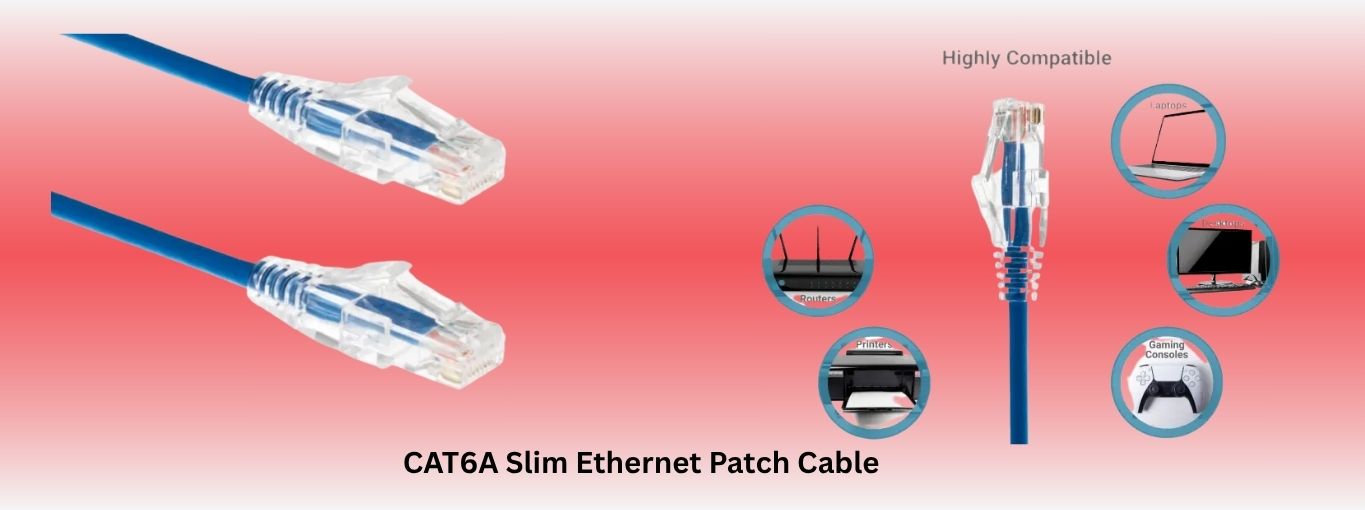
In ToR setups or densely packed racks, bulky cables block airflow and increase thermal load. That’s why many teams now opt for Cat6a Slim Patch Cables.
With up to 30% smaller diameter, they allow for tighter bends, easier cable routing, and improved air circulation. Despite the compact size, they maintain full 10G performance across standard lengths and use pure copper conductors to eliminate signal drop or PoE loss.
Use these where rack space is tight, and heat buildup needs to be minimized without sacrificing performance.
For EMI-Heavy Ladder Trays and Cable Baskets
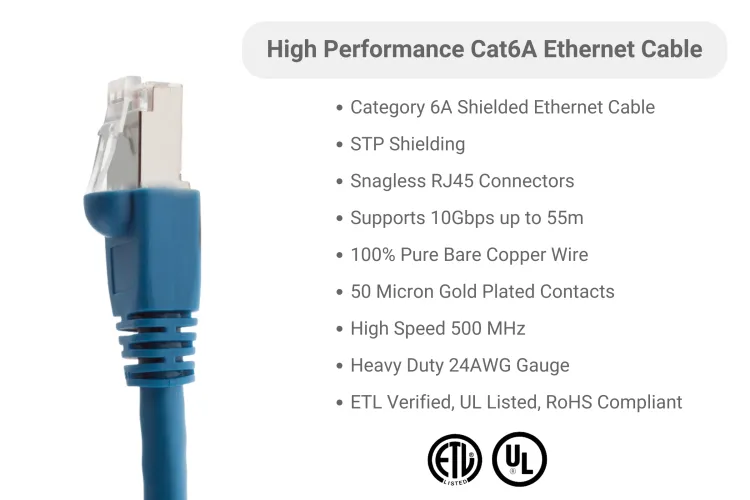
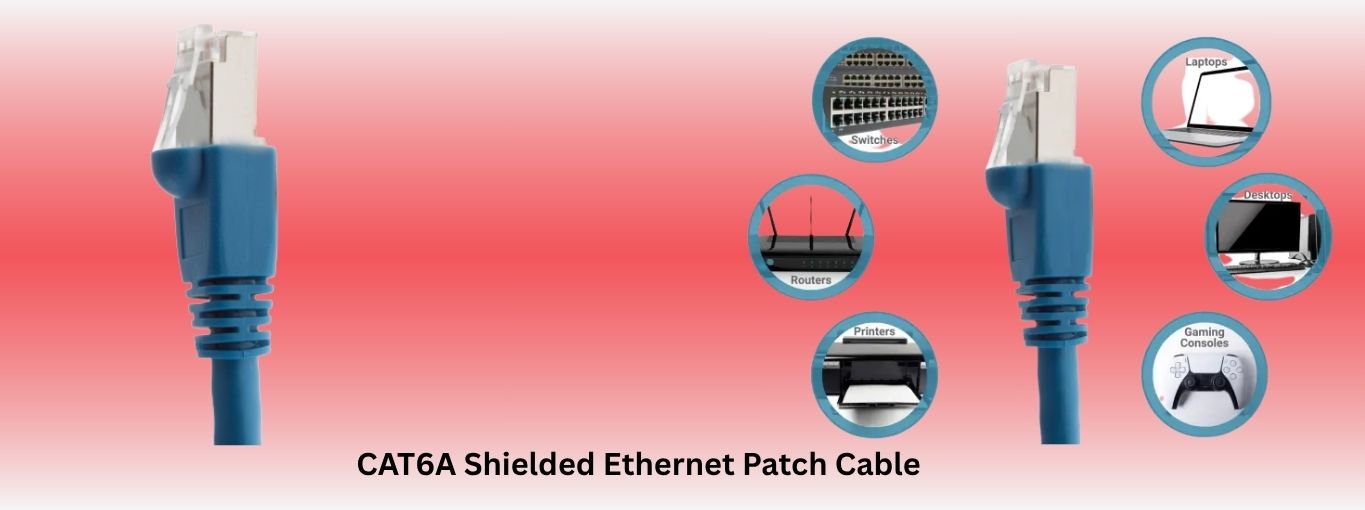
In overhead pathways or floor trenches filled with mixed-voltage lines, EMI is unavoidable. Shielded patching becomes essential. That’s where Cat6a Shielded Patch Cables shine.
Built with foil and braided shielding, these cables eliminate crosstalk and maintain data integrity even when routed near power feeders or cooling systems. They’re ideal for longer horizontal runs where alien crosstalk causes instability with unshielded cables.
CK’s shielded patch series comes pre-terminated, snagless-booted, and color-coded, ready for racks with zero room for signal guesswork.
For Core-to-Edge Structured Cabling Runs
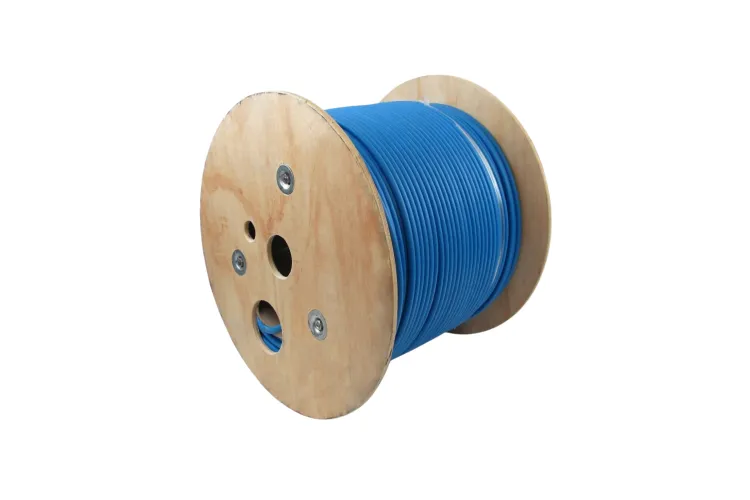
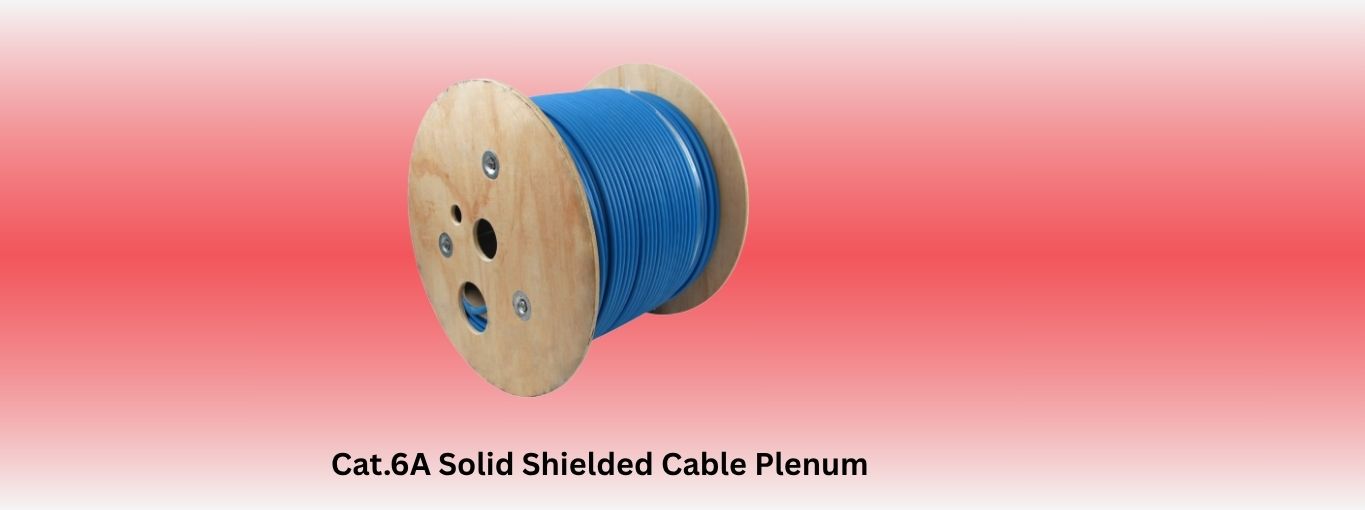
Permanent installations between switches, patch panels, and distribution racks require plenum-rated, shielded bulk cable. That’s where Cat6a Shielded Plenum Bulk Cable fits.
UL-rated for plenum spaces and compliant with modern fire codes, this cable features 23AWG pure copper conductors, S/FTP shielding, and clean terminations at scale. Designed for riser pathways and structured layouts, it provides long-term reliability across entire server rooms and equipment floors.
Run it once, label it clearly, and forget about mid-run failures or PoE drops.
For Ultra-Speed Uplinks and 25G/40G Performance
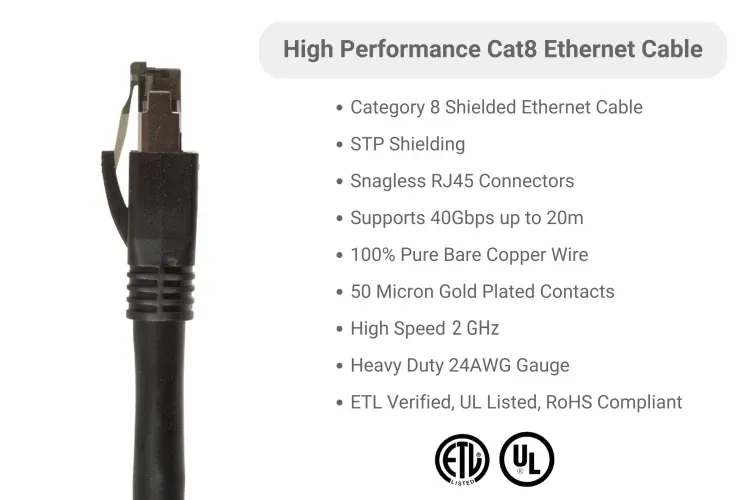
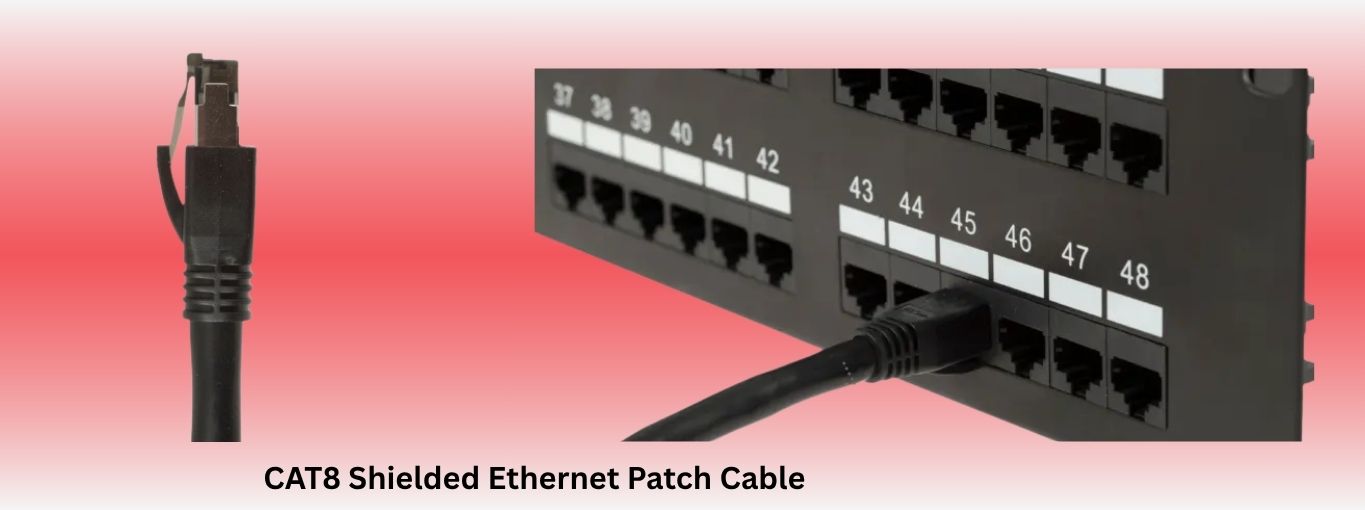
When backbone links demand performance that exceeds standard copper, Cat8 Shielded Patch Cables provide an efficient middle ground between Cat6a and fiber.
Engineered for 25GBASE-T and 40GBASE-T up to 30 meters, these cables feature individual foil wrapping per pair plus overall braided shielding. This ensures stable transmission through EMI-heavy environments like UPS bays and power-dense enclosures.
With RJ45 connectors, Cat8 integrates into existing network gear; no need for fiber adapters or active transceivers. It’s plug-and-play, but built for extreme speed and clean power.
Practical Insight: Choosing the right cable for each zone of your data center, short patch, high EMI, long runs, or high speed, keeps costs aligned and future upgrades easy. Don’t overengineer, don’t under-specify. Just match the cable to the mission.
Final Thoughts
Data centers run on speed, uptime, and zero excuses. A dropped link isn’t just inconvenient, it’s a warning sign. That’s why structured cabling for data centers must balance cost with performance, shielding with layout, and speed with safety.
Cat8 is the answer for short, ultra-high-speed links. Shielded Cat6a still handles 10G + PoE in wider zones. Fiber pushes to 100G+ when distance demands it. But every cable, patch, or bulk must match not just bandwidth but rack density, thermal flow, and EMI exposure.
When you spec your network right from the physical layer, the rest of the stack performs better. That’s why more data center engineers trust CablesAndKits to source cables that meet code, control heat, and keep packets moving.
Get your uplinks right and you’ll never troubleshoot the cable again.
Additional Learning Center Resources
- Choosing the Right Ethernet Cable Category: Cat5e vs Cat6 vs Cat6a vs Cat7 vs Cat8
- Say Goodbye to Slow Networks: Top Ethernet Cables for Ultimate Industrial Connectivity
- What Is a Cat6 Ethernet Cable? Unraveling the Basics of High-Speed Networking
- From Installation to Optimization: The Complete Data Center Cabling Guide
- What is a Direct Attach Copper (DAC) Cable? Common Types And Uses
- Transceiver vs Transmitter – Which One is Right for Your Communication Needs?