Standard Ethernet cables work well in structured offices. But in factories, foundries, and outdoor cabinets, they often become the first point of failure. Cables run through wet conduits, across vibrating gantries, and next to welding gear that throws off electromagnetic interference. These conditions aren’t forgiving, and neither are the costs of downtime.
Every second of network failure in industrial zones disrupts automation, exposes operators to safety risks, and stalls production lines. That’s why rugged cabling isn’t optional. It’s the baseline.
Industrial-grade Ethernet cables are engineered for impact. They use specialized shielding, toughened jackets, sealed connectors, and temperature-rated insulation. All to preserve signal integrity under extreme stress. This guide breaks down how to specify the right cable for any demanding environment, based on real deployment threats.
Rugged Ethernet Cables: Built to Endure Beyond Normal Limits
Rugged Ethernet isn’t about brute thickness. It’s about engineered resilience to crush, twist, abrasion, and corrosion.
Start with the jacket. Office-grade PVC doesn’t last long near oil mist, solvents, or sharp edges. Polyurethane (PUR) resists cuts and abrasion, making it a standard for moving equipment. Thermoplastic elastomer (TPE) adds chemical resistance and stays flexible across wide temperature swings. Both materials outperform PVC in mechanical and environmental protection.
Cable structure matters. Stranded conductors reduce stress from flexing. High-flex drag chain assemblies include layered insulation to prevent kinking, jacket tearing, or copper fatigue over millions of movement cycles.
Connector design is just as critical. Reinforced RJ45 boots withstand repeated plugging and impact. But for industrial reliability, gel-filled UV-rated connectors dominate. These shielded circular connectors lock in place, maintain contact under vibration, and prevent ingress from dust or fluid.
Cables on robotic arms, conveyor lines, or packaging systems cannot be an afterthought. Mechanical stress will find and exploit every weakness.
Defending Your Data: EMI/RFI Shielding in Industrial Environments
Electromagnetic interference causes invisible failures. Motors, drives, relays, and power tools constantly radiate low- and high-frequency noise that corrupts Ethernet signals.
Shielding topology determines resilience:
- S/FTP: Individual foil shields per twisted pair plus braided outer layer. Full-spectrum defense.
- SF/UTP: Overall shielding without per-pair isolation. Moderate EMI zones.
- U/FTP: Foil over each pair, with no outer shield. Offers flexibility in lighter EMI areas.
But shielding only works when grounded correctly. Floating shields invite current loops and degradation. Industrial connectors must bond the cable shield to grounded equipment through the connector housing.
In high-frequency EMI zones, like near welding bays or VFD cabinets, cables without proper shielding and grounding can act as antennas. That leads to packet loss, retries, and unstable device behavior. The failure won’t always be obvious. That makes it dangerous.
To maintain throughput and reliability, match your shielding level to the noise risk. Anything less introduces long-term maintenance pain.
Battling the Elements: Waterproof & Temperature-Resistant Cables
Moisture, thermal extremes, and sunlight destroy unprotected cables fast. In industrial or outdoor sites, these risks aren’t occasional; they’re constant.
Ingress protection (IP) ratings matter. For outdoor drops, washdown zones, or high-humidity enclosures, IP67/IP68-rated jackets and connectors seal out moisture. Inside the cable, gel filling blocks condensation or water from traveling down the length. Without these, oxidation eats the copper from the inside out.
Temperature performance is just as vital. Many cables fail mechanically before they fail electrically. TPE and cross-linked polyethylene jackets handle –40 °C to +80 °C reliably. Cheap PVC turns brittle in cold, softens in heat, and cracks under UV.
Outdoor-rated cables must also handle UV exposure. Prolonged sunlight causes non-UV-stabilized jackets to split, discolor, and fail in under a year. Industrial-rated jackets retain structure and signal performance even in rooftop or pole-mounted deployments.
Environmental breakdowns are slow, but inevitable. If your cable lacks protection, weather becomes the hidden cause of system downtime.
Recommended Industrial‑Grade Ethernet Cables for Smart Procurement
The real cost of an industrial cable failure isn’t just downtime. It’s lost production hours, compromised safety systems, and cascading issues no switch or firewall can correct. That’s why every selection below addresses a specific environmental threat, carefully matched not by category, but by the reality of field deployment.
When Electrical Noise Threatens Data Integrity
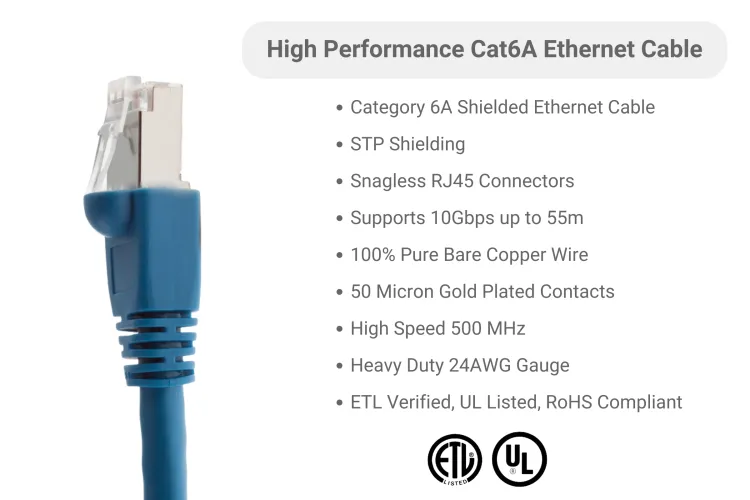
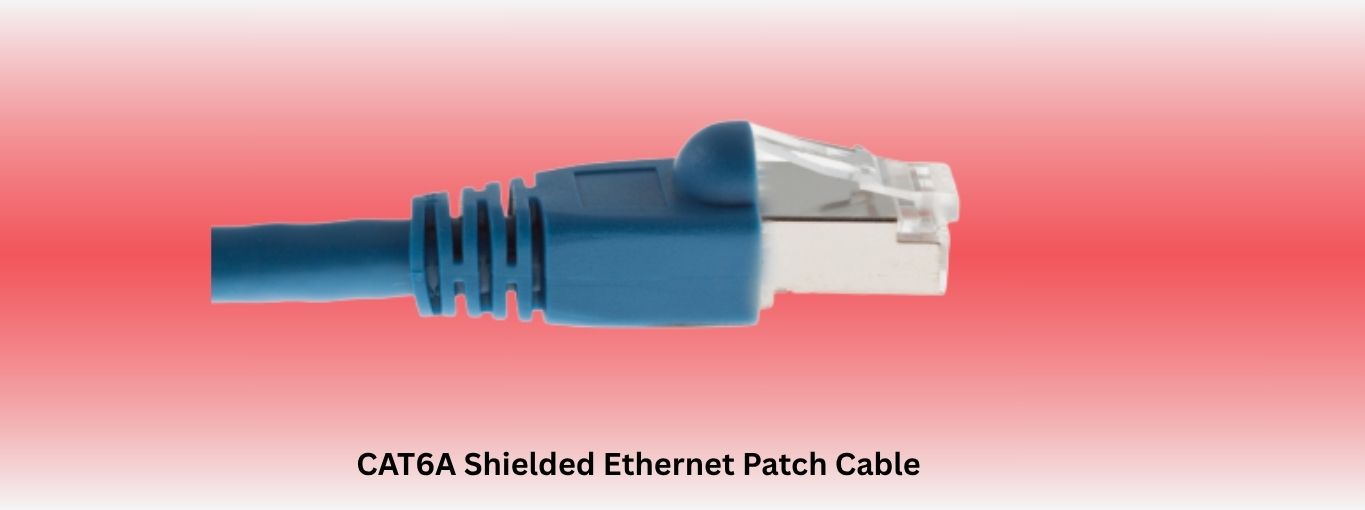
In facilities dense with drives, relays, and high-frequency machinery, shielding isn’t optional. It’s your first line of defense. That’s why teams use a stranded copper patch cable with both foil and braid shielding to suppress EMI where interference is non-negotiable. Its molded boot supports flexing at the plug, while tight pair twists sustain full 10G performance even in compact trays or surface-race installations. View the cable here.
When Outdoor Exposure Demands Sealed Defense
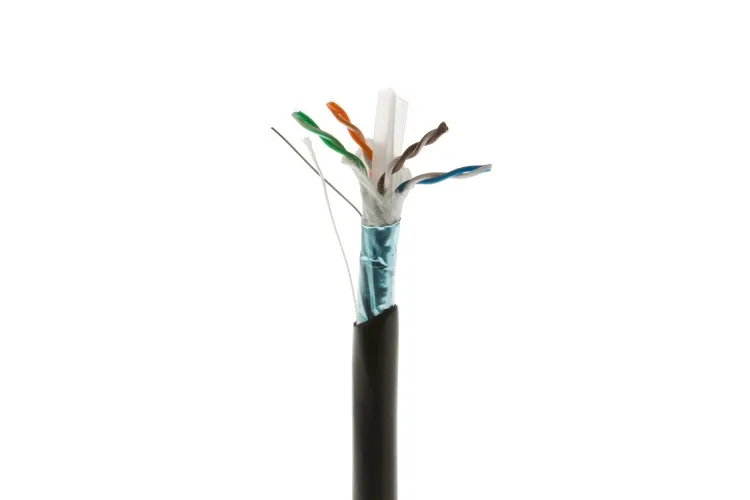
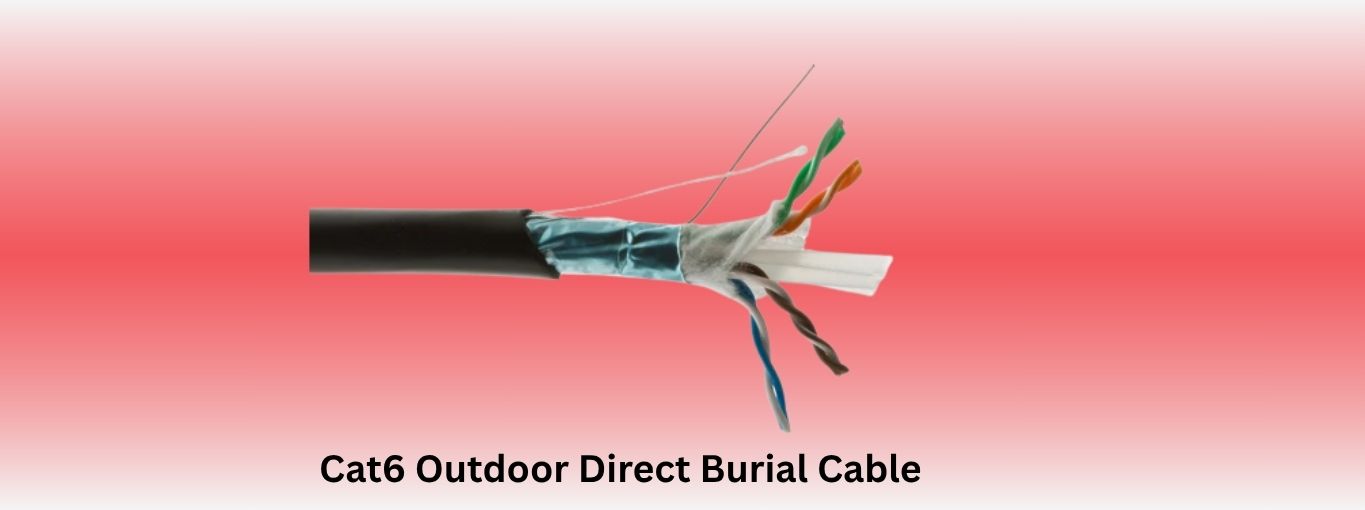
Long outdoor spans and underground links introduce more than water risk. They bring UV degradation, soil movement, and EMI bleed. That’s why for trenching and conduit work, industrial teams use a gel-filled, shielded Cat6 cable with a UV-rated jacket and internal water-blocking layer. This build holds up across temperature swings, keeping signals stable even when buried directly in unstable terrain. Explore the burial-rated cable.
When Panels Need Shielded Terminations in Tight Spaces
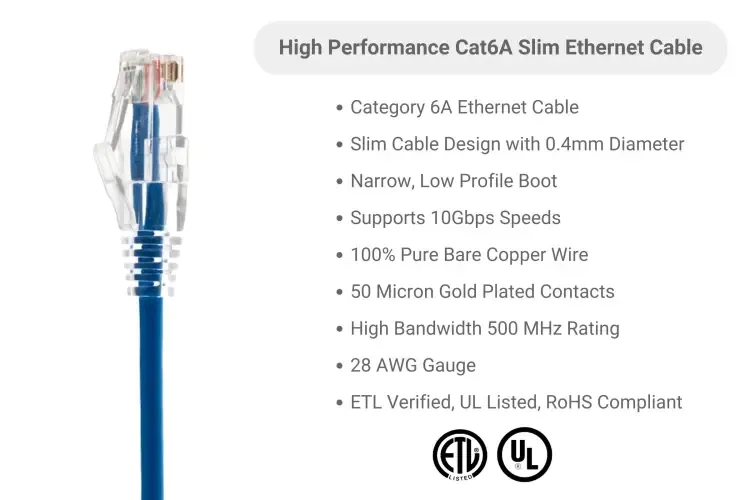
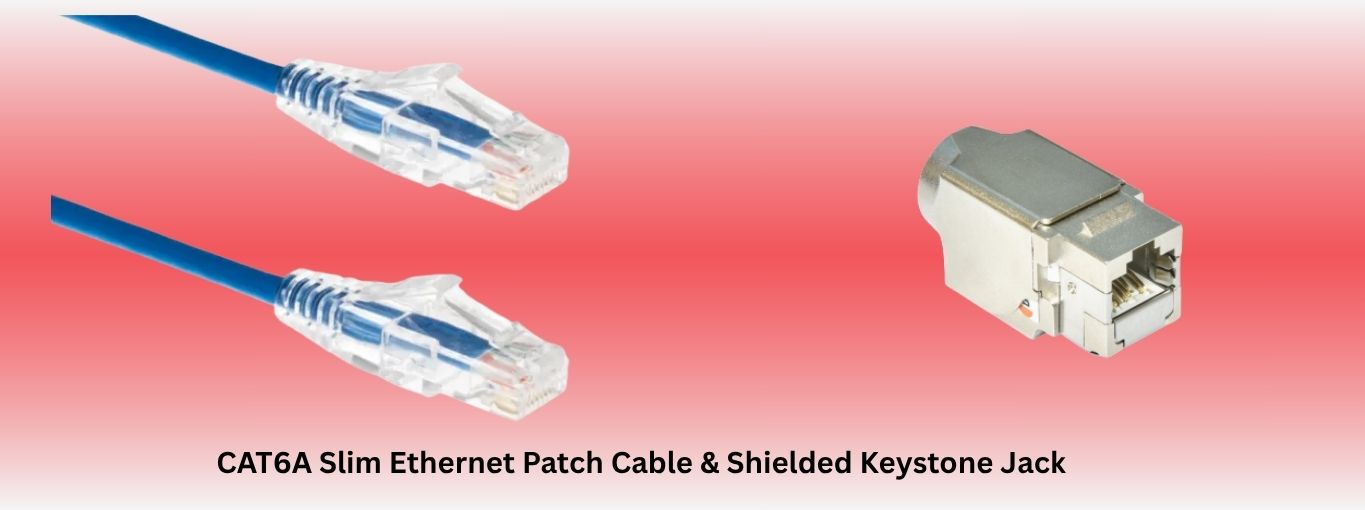
Inside cabinets and junction enclosures, space is limited, but shielding still matters. That’s why field engineers often pair a foil-wrapped patch cable with a fully shielded keystone jack. The result is a compact, EMI-contained connection path ideal for vibration-prone enclosures or high-density equipment bays. When installed into a grounded metal faceplate or enclosure, this combo provides uninterrupted shielding from board to port. See the shielded jack.
When Motion Requires Flexibility Without Failure
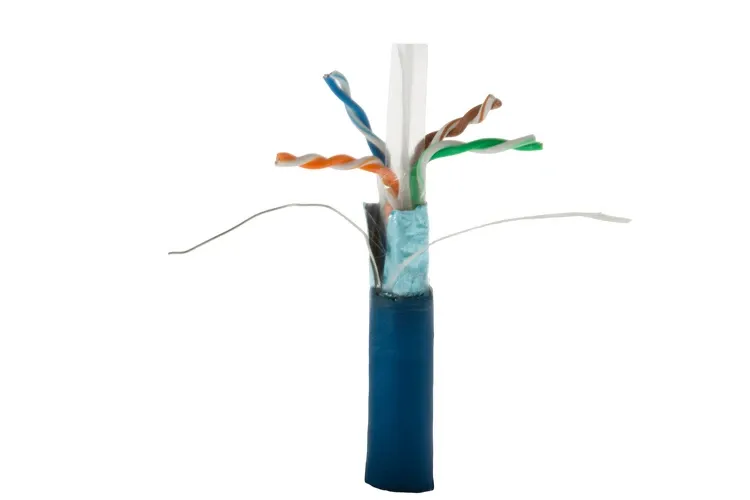
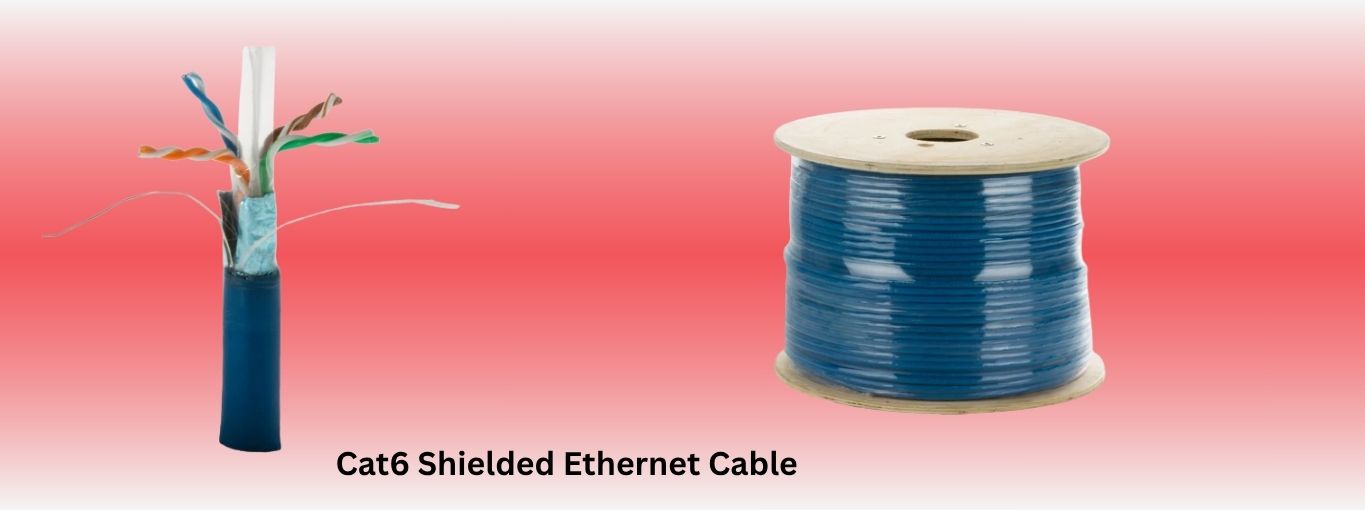
Machines move. Rigs pivot. Arms drag cables along guides. But most pre-terminated cords aren’t designed for that kind of abuse. That’s why techs who build motion-critical networks start with a shielded Cat6 bulk cable and terminate it to length with shielded plugs and strain-relief boots. When installed with proper bend radius and jacket support, this combo handles flex and minor vibration where drag-chain ratings aren’t available but durability still matters. Use this flexible shielded cable.
Smart procurement isn’t about chasing specs, it’s about eliminating failure. Whether the threat is interference, moisture, heat, or motion, each product is purpose-driven. These cables don’t just meet industrial-grade standards, they reflect how experienced teams engineer resilience where it matters. Getting it right from the start is how industrial networks stay online without surprises.
Choosing Your Toughest Link: Selecting the Right Industrial-Grade Cable
Start by assessing your threat exposure:
- Water and dust: Use outdoor-rated, gel-filled Cat6 cable with a UV-stabilized jacket. Seal every termination point with shielded keystone jacks or IP67-rated couplers to block ingress.
- EMI-prone zones: Shielding is non-negotiable. Use foil-and-braid shielded patch cables and metal-body keystone jacks to maintain signal clarity near drives, welders, or fluorescent ballasts.
- Outdoor or buried runs: Skip the conduit. A direct-burial rated cable with a polyethylene jacket withstands UV, soil contact, and moisture migration; ideal for rooftops or long-distance trench work.
- Flexing or mobile equipment: While CK doesn’t stock certified drag-chain assemblies, their shielded bulk cable combined with shielded boots and snagless plugs provides enough resilience for moderate, repetitive motion.
Then confirm what backs it up:
- UL/ETL for verified safety and flame compliance.
- TIA/EIA for pair integrity and signal spec across the entire link.
- RoHS/REACH for material safety; critical in food-grade, medical, or regulated zones.
Note: If your install demands certified M12, IP68 sealing, or drag-chain–rated jackets, source accordingly. But for 90% of industrial environments, properly shielded and sealed Cat6a cabling from CablesAndKits covers the risk without overengineering the solution.
Conclusion: Build Networks That Don’t Quit
Weak cabling leads to hidden instability, drops, retries, lost logs, and failed devices. One failed cable takes hours to troubleshoot and days to fix.
That’s why industrial-grade Ethernet is a planning decision, not just a product. Choose the wrong spec, and everything downstream suffers.
Smart IT managers know the right building material for any network is the cable itself. Get it wrong, and no switch, firewall, or software will fix the bottlenecks.
That’s why so many trust CablesAndKits to get it right from the start.
Every link matters. Make your industry strong.
Additional Learning Center Resources
- Choosing the Right Ethernet Cable Category: Cat5e vs Cat6 vs Cat6a vs Cat7 vs Cat8
- Say Goodbye to Slow Networks: Top Ethernet Cables for Ultimate Industrial Connectivity
- What Is a Cat6 Ethernet Cable? Unraveling the Basics of High-Speed Networking
- From Installation to Optimization: The Complete Data Center Cabling Guide
- What is a Direct Attach Copper (DAC) Cable? Common Types And Uses
- Transceiver vs Transmitter – Which One is Right for Your Communication Needs?