Robotics today is no longer about simple repetition. These systems rely on Ethernet to keep communication fast, stable, and predictable. From machine vision to real-time sensor feedback and adaptive control, every moving or fixed endpoint depends on ethernet connection.
But typical data cables are not made for this. Robotic arms, cable chains, and servo drives create constant motion, sharp bends, and heavy EMI. In these spots, signal quality drops fast. Jackets crack, shielding loosens, and grounding breaks down, causing issues that take hours to track.
This guide focuses on what actually holds up in the field. Not what’s printed on spec sheets, but what survives torsion, EMI, vibration, and repeat movement. Because in real-world robotics, it is motion, not bandwidth, that exposes poor cable design.
Choose the Right Ethernet for Industrial Automation
Automation systems require Ethernet to behave more like a control bus than a network pipe. Real-time feedback loops cannot tolerate jitter, crosstalk, or ground loops. This means cabling strategy must align with motion, EMI, and device requirements, not just speed.
- Use Shielded Ethernet For Automation Protocols
Protocols like Profinet, EtherCAT, and Ethernet/IP run over Ethernet but behave differently than standard TCP/IP. They demand predictable latency and low jitter, which is why shielded Ethernet in robotics is not optional.
- Choose High-Flex Ethernet for Robotic Systems
Static PLCs can tolerate rigid cabling. But robotic arms, linear actuators, and rotating assemblies require high-flex Ethernet cables that survive repetitive motion without breaking shield continuity or conductor insulation.
- Match Ethernet Cable for Reliable Connections
Automation equipment often includes shielded RJ45 ports or M12 X-coded connectors. Using matched cable-to-device interfaces ensures signal shielding continues through the entire link.
Deployment Note: In closed-loop automation, signal stability matters more than bandwidth. Always match cable specs to the motion profile and interference density.
Machine-to-Machine Cabling That Survives Constant Flex and EMI
Machine-to-machine links form the nervous system of industrial automation. These links between motion systems and control hardware are under constant physical stress. Which makes them especially vulnerable to wear and early failure.
Challenges: Mechanical Stress and Environmental Hazards
Ethernet used in robotic joints and cabinet spaces often need to bend tightly, flex repeatedly, and route cleanly through narrow, crowded spaces.
Surrounding equipment, such as motors and drives, creates electromagnetic interference that interferes with clean data transmission.
At the same time, exposure to harsh fluids like oils and solvents gradually weakens traditional cable jackets, especially under heat or vibration.
Unless the cable is engineered for movement and interference, failures can appear quickly, often within just weeks of deployment.
Solution: Automation & Robotics-Rated Ethernet Cables
To survive this kind of dynamic stress, cables must be used for flexibility and protection.
Stranded Ethernet conductors allow repeated motion without internal fractures.
Dual-layer shielding S/FTP Ethernet reduces signal loss from nearby EMI sources. Molded strain relief at the connectors prevents jacket slippage under movement. For complete shielding continuity, shielded keystone jacks with metal bodies help maintain a reliable ground path through the enclosure.
Field Outcome: Eliminating False Triggers at the Source
In one real-world deployment, a robotic system experiences dozens of false sensor activations per hour. Investigation revealed the issue stemmed from rigid Cat5e patch cables that failed under repeated bending.
Once those cables were replaced with flex-rated S/FTP Ethernet cables, the false signals disappeared without any changes to the controller logic or hardware. The cabling upgrade alone resolved the performance issue.
Field Tip: For dynamic machine paths, always choose high-flex Ethernet cables rated for at least one million bending cycles. Avoid PVC jackets in moving systems, and ensure proper cable routing to extend service life.
High-Flex Ethernet Cables Built for Real Robotic Motion
Selecting Ethernet for robotics is as much about mechanical durability as signal fidelity. Look for:
- Stranded copper conductors for flexibility
- Slim profile for tight installations or full jacketed patch cables for protection
- Abrasion-resistant, torsion-rated jackets like PUR or TPE
- S/FTP shielding to block EMI and maintain consistent impedance
- Snagless molded boots to protect terminations during movement
Most failures occur at:
- Strain relief points where cable exits housing
- Connector interfaces under vibration
- Tight bends causing shield cracking or conductor fatigue
Engineering Insight: A cable rated for 1 million flexes may still fail early if its strain relief or bend radius isn’t respected. Cable routing matters as much as the spec sheet.
EMI, Termination, and Grounding: The Hidden Causes of Robotic Downtime
In automation zones, EMI from motors, servos, and welding arcs can saturate standard Ethernet lines. Even shielded cables fail if termination isn’t correct.
Completing the Shield Path
A floating shield acts like an antenna. Use grounded RJ45 keystones or metal couplers to bond cable shields to chassis ground. This reduces radiated emissions and protects sensitive gear.
Preventing Dropouts
Jittery camera feeds and phantom sensor triggers often trace back to poor shielding. A grounded S/FTP Ethernet cable helps maintain system integrity in high-frequency zones.
Ground Loop Prevention
In robotic cabinets with shared grounds, improper shield routing can create loops. This introduces noise on signal lines and causes voltage differentials. Using isolated terminations or chassis-bonded shields prevents this.
Ensuring EMC Compliance
Certifications like EN 55011 and IEC 61000 require that cables suppress both emitted and conducted noise. That’s only achievable with well-shielded, properly grounded cabling.
Mitigation Tip:Shielded cables solve nothing without proper grounding. Use shielded keystone jacks and ground tabs to avoid packet loss and compliance failures.
Real-World Ethernet for Robotics: Tested Cabling That Fixes Motion Failures
Below are four real-world use cases and cable selections trusted by automation teams. Each solution addresses both mechanical stress and electrical integrity.
- For PoE Drops Near VFDs & EMI-Heavy Zones
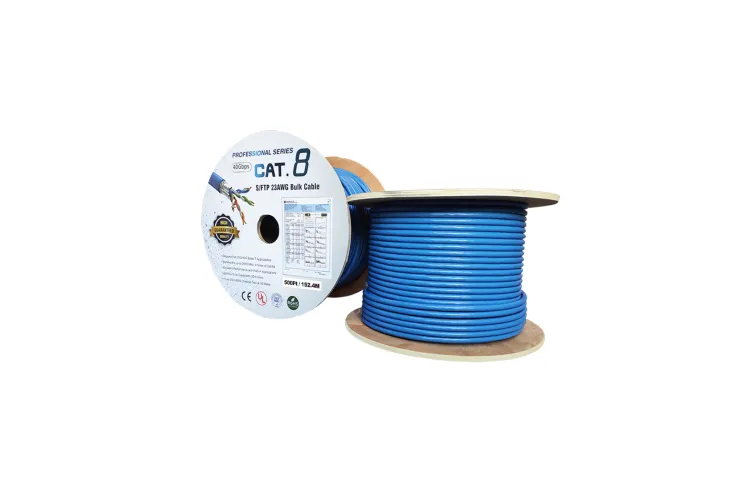
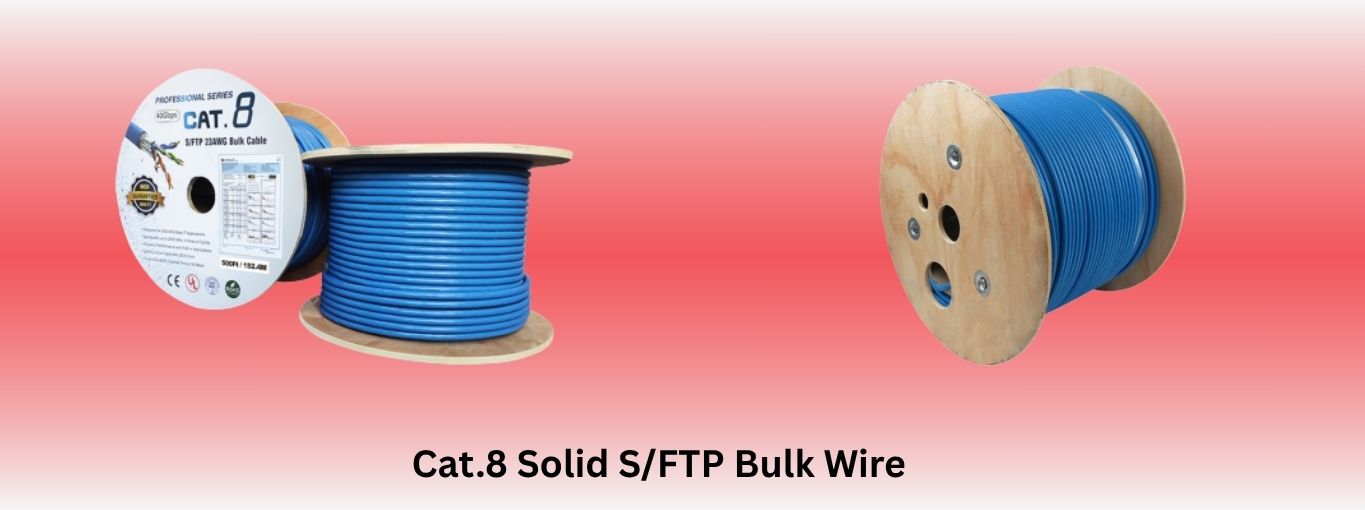
In robotic arms powered by PoE, voltage dips and packet loss often happen near VFD cabinets. ACat8 Shielded Patch Cable with S/FTP shielding and 24 AWG pure copper minimizes interference. Its 2 GHz bandwidth ensures headroom even in short but noisy environments.
- For Motion-Sensitive and Long Tray Runs
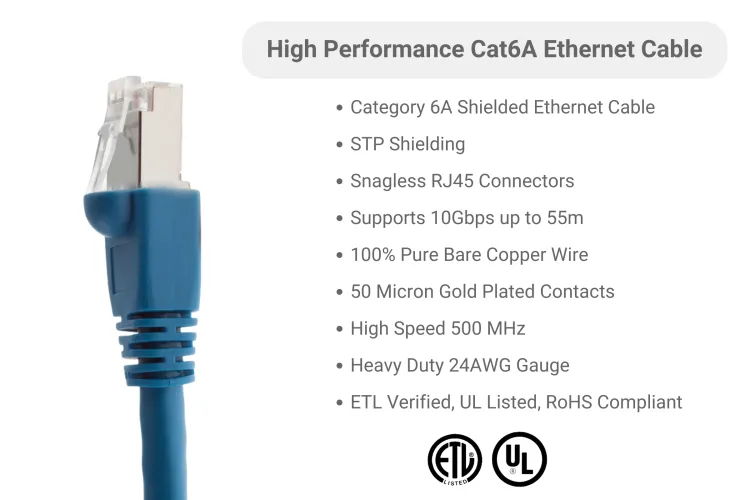
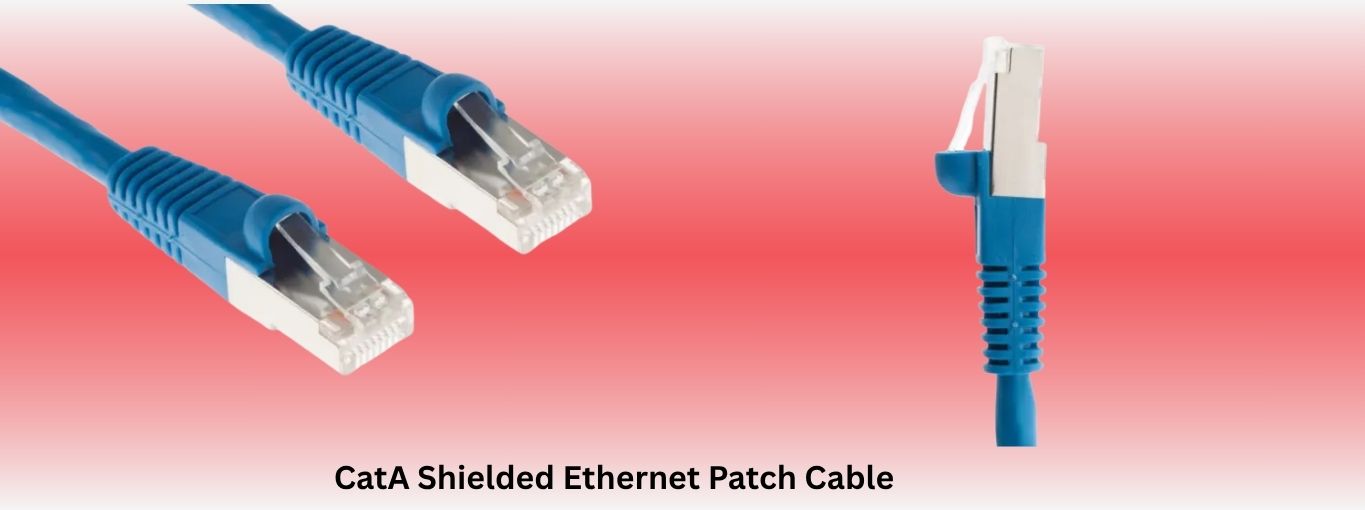
An overhead tray running with hundreds of feet of cable must survive movement and EMI. The Cat6A Shielded Patch Cable with Half-Moon Boot combines dual-layer shielding with snagless molded boots to reduce stress at entry points. Its 23 AWG core maintains 10 Gbps across 100 meters.
- For Budget-Friendly Legacy or Dry Enclosures
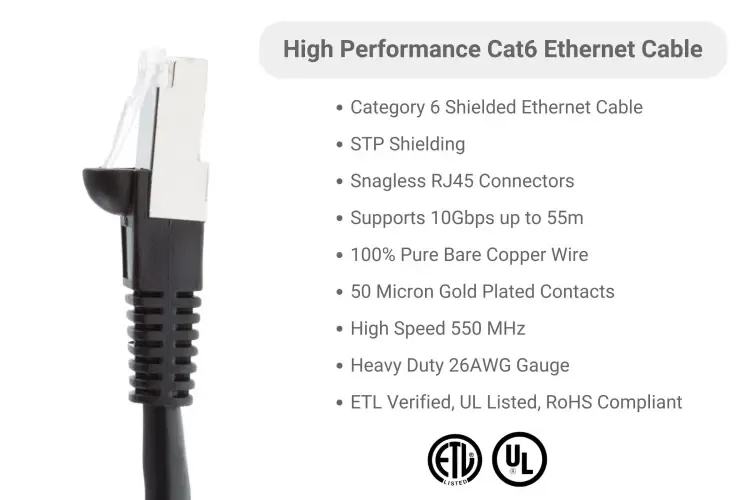
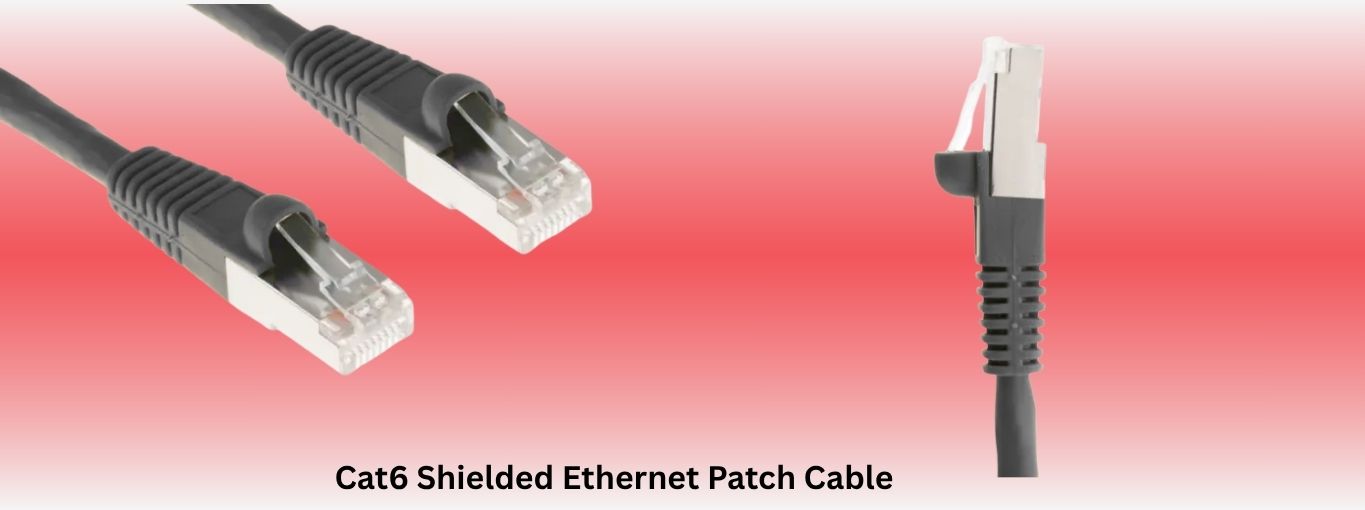
Not every panel needs 10G. In legacy PLCs or dry control boxes, theCat6 Shielded Patch Cable with Half-Moon Boot delivers 550 MHz EMI protection affordably. It features an STP build with 26 AWG strands to support lower bandwidths in low-motion zones.
- For Shielded Enclosures That Require Grounding
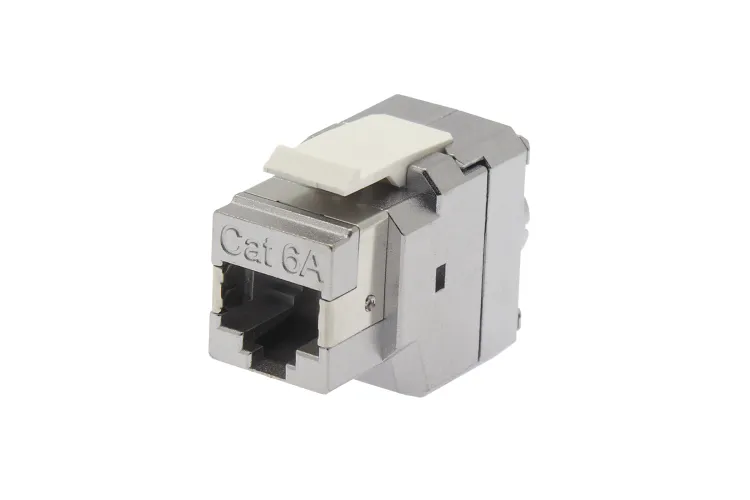
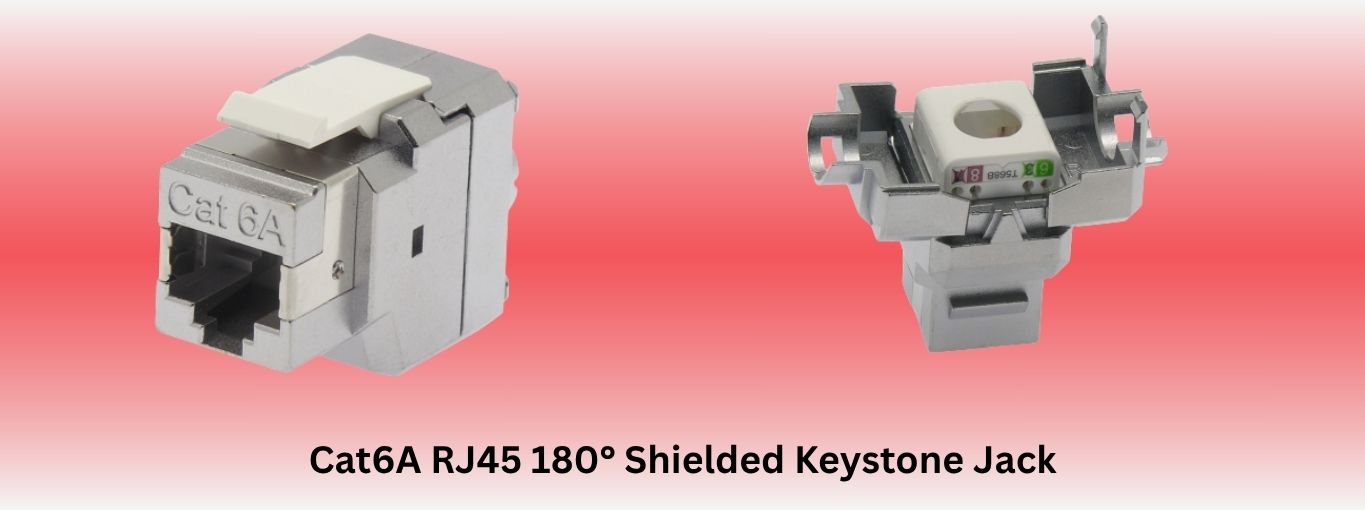
Inside shielded control cabinets or stainless-steel housings, use the 180°Cat6A RJ45 Shielded Keystone Jack. Its zinc die-cast body and grounding tab ensure proper shield bonding from patch cable to enclosure, eliminating floating shield current.
Smart Spec Insight: In automation, choose cabling based on movement and EMI, not just bandwidth. That’s how expert teams prevent downtime across thousands of cycles.
Final Insight
Robotic uptime isn’t lost at the switch, it’s lost where cables kink, fail to ground, or fatigue under motion.
In robotic automation, PoE cables function as exposed mechanical parts. They endure constant bending, EMI, and vibration. Failures here lead to missed cycles, jitter, or full system stalls.
That is where CablesAndKits’s robotics-rated Ethernet cables prove their value in demanding automation environments.
Today’s industrial teams no longer select cables by catalog bandwidth. They spec them based on real-world durability, shielding effectiveness, and grounding reliability. That is why more automation engineers choose shielded Keystone Jack Ethernet connections that meet the reliability standards needed to keep robots running hour after hour.
Additional Learning Center Resources
- Choosing the Right Ethernet Cable Category: Cat5e vs Cat6 vs Cat6a vs Cat7 vs Cat8
- Say Goodbye to Slow Networks: Top Ethernet Cables for Ultimate Industrial Connectivity
- What Is a Cat6 Ethernet Cable? Unraveling the Basics of High-Speed Networking
- From Installation to Optimization: The Complete Data Center Cabling Guide
- What is a Direct Attach Copper (DAC) Cable? Common Types And Uses
- Transceiver vs Transmitter – Which One is Right for Your Communication Needs?